
SEAGULL HEALTH
Your health,We care!
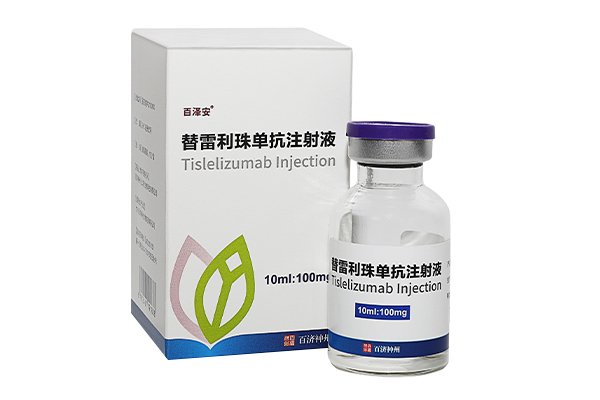
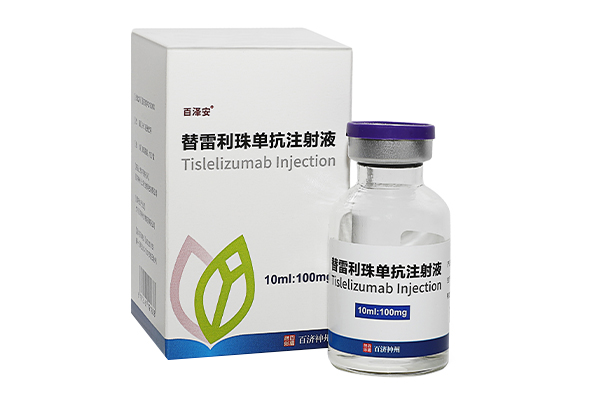
Tislelizumab Injection, with its significant efficacy and favorable tolerance, provides diverse treatment options and long-term survival hope for a large number of patients with advanced tumors.

 AuthenticGuaranteeFast DeliveryPrivacy
 Tislelizumab Injection was approved for marketing by the National Medical Products Administration (NMPA) on December 27, 2019, with subsequent gradual expansion of its indications.
This product is indicated for the treatment of relapsed or refractory classical Hodgkin lymphoma in patients who have received at least two lines of systemic chemotherapy.
This indication was approved conditionally based on the objective response rate and duration of response data from a single-arm clinical trial. The full approval of this indication will depend on whether the ongoing confirmatory randomized controlled clinical trial can confirm the significant clinical benefit of this product over the standard treatment.
This product is indicated for the treatment of locally advanced or metastatic urothelial carcinoma with high PD-L1 expression in patients who have failed platinum-containing chemotherapy, including those with disease progression within 12 months after neoadjuvant or adjuvant chemotherapy.
This indication was approved conditionally based on the objective response rate and duration of response data from a single-arm clinical trial. The full approval of this indication will depend on whether the ongoing confirmatory randomized controlled clinical trial can confirm the significant clinical benefit of this product over the standard treatment.
This product, in combination with paclitaxel plus carboplatin or paclitaxel for injection (albumin-bound) plus carboplatin, is indicated for the first-line treatment of unresectable locally advanced or metastatic squamous NSCLC.
This product, in combination with pemetrexed plus platinum-based chemotherapy, is indicated for the first-line treatment of unresectable locally advanced or metastatic non-squamous NSCLC in patients with epidermal growth factor receptor (EGFR) gene mutation-negative and anaplastic lymphoma kinase (ALK)-negative.
This product as a monotherapy is indicated for the treatment of adult patients with unresectable locally advanced or metastatic non-squamous NSCLC who are EGFR mutation-negative and ALK-negative, and have experienced disease progression or intolerance after prior platinum-containing chemotherapy; it is also indicated for adult patients with unresectable locally advanced or metastatic squamous NSCLC who are EGFR-negative and ALK-negative or status unknown, and have experienced disease progression or intolerance after prior platinum-containing chemotherapy.
This product as a monotherapy is indicated for the first-line treatment of patients with unresectable or metastatic HCC.
This product is indicated for the treatment of advanced HCC patients who have previously received sorafenib, lenvatinib, or oxaliplatin-containing systemic chemotherapy.
This product is indicated for the treatment of adult patients with unresectable or metastatic MSI-H or mismatch repair-deficient (dMMR) advanced solid tumors, including:
Patients with advanced colorectal cancer who have experienced disease progression after prior treatment with fluoropyrimidines, oxaliplatin and irinotecan;
Patients with other advanced solid tumors who have experienced disease progression after prior treatment and have no satisfactory alternative treatment options.
This indication was approved conditionally based on surrogate endpoints, and clinical endpoint data have not yet been obtained. The efficacy and safety of this product are to be further confirmed after its marketing.
This product, in combination with paclitaxel plus platinum-based drugs or fluoropyrimidine-containing plus platinum-based drugs, is indicated for the first-line treatment of unresectable locally advanced, relapsed or metastatic esophageal squamous cell carcinoma.
This product is indicated for the treatment of locally advanced or metastatic esophageal squamous cell carcinoma in patients who have experienced disease progression or intolerance after prior first-line standard chemotherapy.
This product, in combination with gemcitabine plus cisplatin, is indicated for the first-line treatment of relapsed or metastatic nasopharyngeal carcinoma.
This product, in combination with fluoropyrimidine-containing plus platinum-based chemotherapy, is indicated for the first-line treatment of locally advanced unresectable or metastatic gastric or gastroesophageal junction adenocarcinoma.
This product must be administered under the guidance of a physician experienced in tumor treatment.
For the treatment of locally advanced or metastatic urothelial carcinoma, this product should be used in patients with high PD-L1 expression. PD-L1 expression shall be assessed by a detection method approved by the National Medical Products Administration (NMPA). PD-L1 expression is determined by immunohistochemistry. High PD-L1 expression is defined as follows:
If the number of tumor-infiltrating immune cells is >1%, high PD-L1 expression refers to PD-L1 expression in ≥25% of tumor cells or ≥25% of immune cells;
If the number of tumor-infiltrating immune cells is ≤1%, high PD-L1 expression refers to PD-L1 expression in ≥25% of tumor cells or all immune cells (100%).
Before treating adult patients with MSI-H/dMMR advanced solid tumors with this product, it is necessary to confirm the MSI-H/dMMR status. The presence of MSI-H/dMMR must be determined by a fully validated detection method before administration.
This product is administered via intravenous infusion at a recommended dose of 200 mg once every 3 weeks. Treatment should continue until disease progression or unacceptable toxicity occurs.
When this product is administered in combination with chemotherapy, it should be infused first if the two are given on the same day.
Atypical treatment responses may be observed (e.g., temporary tumor enlargement or appearance of new lesions within the first few months, followed by tumor shrinkage or disappearance of new lesions). If the patient’s clinical symptoms are stable or continuously alleviated, even with initial manifestations of disease progression, continuation of this product may be considered based on the overall clinical benefit assessment, until disease progression is confirmed.
Patients with hypersensitivity to tislelizumab or any of the excipients contained in Tislelizumab Injection.
Adverse reactions with an incidence rate of ≥10% include hypothyroidism, fatigue, increased alanine aminotransferase, increased aspartate aminotransferase, and rash. The incidence rate of grade 3 and above adverse reactions is 18.2%. Adverse drug reactions (ADRs) with an incidence rate of ≥1% include anemia, non-infectious pneumonitis, increased aspartate aminotransferase, increased alanine aminotransferase, increased gamma-glutamyl transferase, increased blood bilirubin, and pulmonary infection.
The most common (incidence rate ≥20%) adverse reactions of all grades include anemia, leukopenia, neutropenia, thrombocytopenia, nausea, constipation, vomiting, pain, diarrhea, abdominal pain, fatigue, decreased appetite, hypoproteinemia, increased alanine aminotransferase, and increased aspartate aminotransferase.
Pregnancy
There are no data on the use of this product in pregnant women. Animal studies have shown that PD-1-blocking antibodies have embryo-fetal toxicity. It is known that human IgG4 can cross the placental barrier. As an IgG4, this product may be transferred from the mother to the developing fetus. The use of this product during pregnancy is not recommended unless the clinical benefit outweighs the potential risk.
Lactation
It is currently unknown whether this product is excreted in human milk, as well as the effects of this product on breastfed infants and milk production. Since human IgG is secreted into breast milk, this product may pose potential risks to breastfed infants. Therefore, lactating women are advised to discontinue breastfeeding during the treatment with this product and for at least 5 months after the last administration.
Contraception
Women of childbearing potential should use effective contraceptive measures during the treatment with this product and for at least 5 months after the last administration.
Fertility
There are no study data on the potential effects of this product on fertility, so the impact of this product on male and female fertility is unknown.
The safety and efficacy of this product in children and adolescents under 18 years of age have not been established.
Among 2390 patients who received monotherapy with this product in clinical trials, elderly patients aged ≥65years accounted for 33.7% of the total patients. The incidence of adverse drug reactions of all grades was 70.8% in both elderly patients and patients <65 years of age. The incidence of adverse drug reactions of grade 3 and above was 18.1% and 18.2%, respectively; the incidence of adverse reactions leading to treatment suspension was 17.6% and 15.0%, respectively; and the incidence of adverse reactions leading to permanent treatment discontinuation was 7.2% and 4.5%, respectively.
A similar trend was observed in elderly patients receiving combination therapy of this product with chemotherapy compared with younger patients <65 years of age.
Elderly patients should use this product with caution under the guidance of physicians. If use is necessary, no dosage adjustment is required.
For more detailed drug information, please consult the official package leaflet.
Tislelizumab is an antineoplastic biological a···...【详情】
The recommended standard dosage of Tislelizuma···...【详情】
As an immunotherapeutic agent (PD-1 inhibitor)···...【详情】
Patients treated with tislelizumab injection s···...【详情】
Tislelizumab (anti-PD-1 monoclonal antibody) s···...【详情】
If any issues arise, please contact us immediately.
Email:haiousales@gmail.com
A light diet is recommended. Avoid spicy and greasy foods, and choose easily digestible foods.
No. The medication may lose its efficacy and even cause adverse reactions.
100 mg per vial (equivalent to 100 mg of active ingredient per vial).
Use is contraindicated in pregnant women. As the drug ingredients may affect fetal development through the placenta, women at any stage of pregnancy should avoid using this medication.
Copyright 2024 @ haiouhealth.com All right reserved SEAGULL HEALTH


